Blog

Just the name itself conjures up all kinds of images in the mind’s eye: the Devil’s Beef Tub is a dramatic wild hollow formed by four hills just north of Moffat where the Johnstons held their stolen cattle – and is the quintessential reiver spot.

The huge Beef Tub, its rugged scree-covered slopes forming a U-shaped glacial valley, is a source of the river Annan that runs away down to the Solway Firth as well as the mighty Clyde and Tweed waters and is a popular walking spot.

The troublesome...
When the countess of Northumberland went on the run following her husband’s failed participation in the catholic gentry’s ‘Rising of the North’ in support of Mary, Queen of Scots in 1569, she ended up in Liddesdale.

Her horse, those of her two lady-in-waiting’s horses, and ten other of the party’s rides were lifted by the locals and the fellow rebel Earl of Westmoreland swapped his coat of plate and sword with their host, John Armstrong of the Side, in order to travel more incognito.

The earl...

The crow stepped gables and smart houses of Jedburgh mark it as a typical Border town.

But not many others can boast of having an original tower and bastle house where Royalty lived right in the centre. Mary, Queen of Scots, stayed there in 1566 and it’s now lovingly dedicated to her with a grand collection of objects relating to her on display in each themed room. It’s free to visit and open year-round.

Mary’s lover, then third husband, Lord Bothwell had been stabbed by the reiver Little Jock...

dfkenrsi7pxpdazujg9ttnxhngqi 3.52 MB
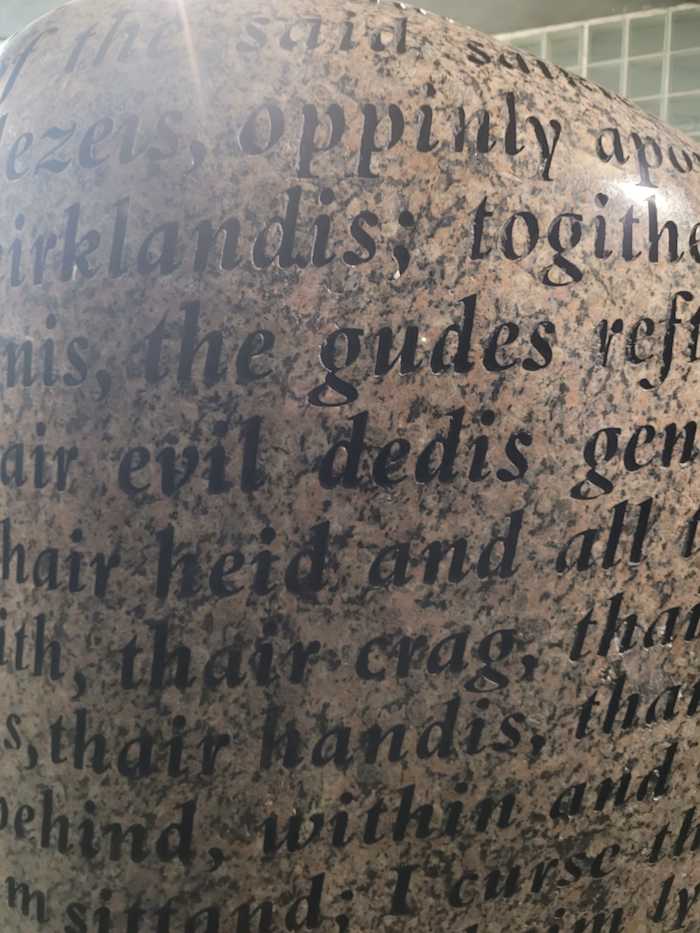
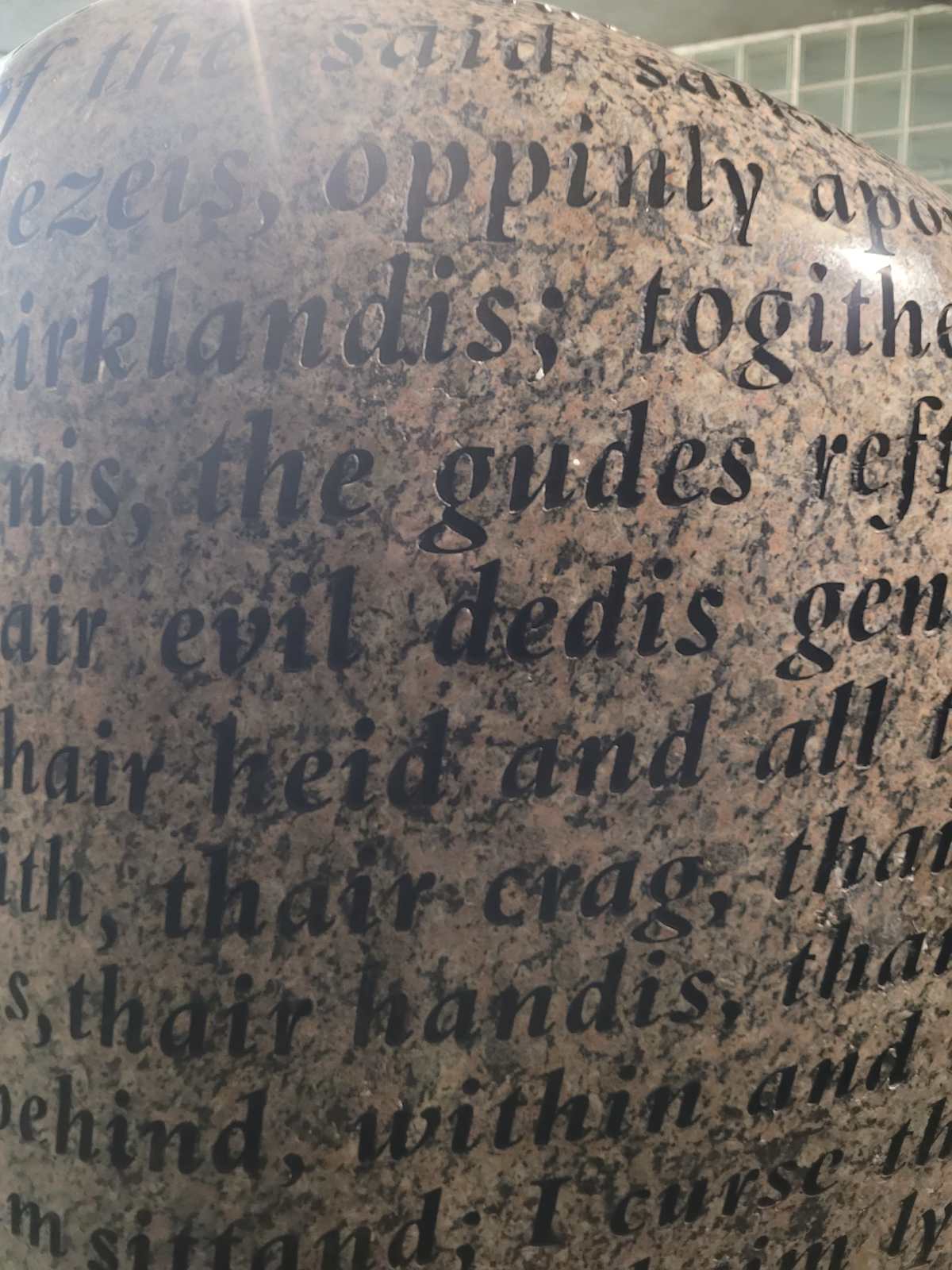
At the castle end of the Tullie House underpass in Carlisle, whose floor is etched with the names of the Border Reiver families, sits a huge chunk of polished granite with some of the text from Gavin Dunbar, the Archbishop of Glasgow’s, ‘Great motion of Cursing’ against the reivers.

Dating back to 1525, the prose is a long, rambling rant that curses ‘thair heid and all the haris of thair heid; I curse thair face, thair ene [eyes], thair mouth, thair neise,...

Armstrong

The Armstrongs were the most prominent surname associated with the reiving times and had major grains in Liddesdale at Mangerton and Whithaugh. The Gingles Armstrongs were also much involved in the trouble. The Armstrong name was also found in Cumberland and Northumberland and a most notorious branch hailed from the Lanercost area.

Aynsely

The Aynsleys were a West Teviotdale family with the major branch at Fala south of Jedburgh. They were associated with the Kerrs of Ferniehurst as...

5ylg5ce48l3ih9rjm43kdxbvp3oo 152.75 KB

People often complain that the border reivers get a bad press and that history has misrepresented them somehow, that they were just doing what they had to do to get by and it was a matter of survival.

The reality is that many other families were living in the border country and didn’t get as involved in the cattle thieving gangs as much as the more notorious names, so they don’t show up in the records as regularly.

Take, for example, the Youngers.

There are...

The fairly substantial stone ruins of Bewcastle Castle stands on private ground near the Demense Farm.

Built on the site of an earlier Roman fort, Bewcastle was first constructed from timber in around 1092 before stone from the Roman site was recycled into the castle as it was more solidly constructed in around 1350.

The Musgrave family were constables of the castle during the reiver period and in 1596 John Musgrave led a number of large raids over the border including a fray of 2,000 men to...

eenabl7fqs34jmfgipiy7bar45bc 3.52 MB

The border reivers had a fractious relationship with the church – not least with the ‘great curses’ placed on them by the Bishop of Durham and Archbishop of Glasgow in 1525.

Durham cursed the Tynedale reivers while Glasgow was also talked into making curses against the Tynedale men before penning his infamous long denunciation of the Scottish riders later that year.

Not that the ranting of Catholic officials bothered the reivers too much, and in true local...

The term reiver comes from the crimes of reif and stouthreif that the border families were committing.

Archibald Armstrong was described as a ‘common thief and revar (reiver)’ in 1530 after he’d had his horse taken off him by George Hoppringle (Pringle) of Torwoodlee when caught during an ‘invasion of the thieves.’

The Scottish Lords of Council made a proclamation from Edinburgh in 1546 against any ‘person or persons that resets (harbours) any thevis or revaris, or takes assurance with thevis...

Putting a complaint in to the opposite warden for thefts committed was common practice on the borders.

So when Hugh Lowther grumbled to the Scottish West March Warden Lord Maxwell about a number of open day forays ridden on Carlisle Moor and Rockcliffe Field in the April of 1537 by borderers of the West March of Scotland, there was nothing unusual there.

What was different, however, was the fact that three boatloads of the Scots had sailed across the Solway Firth and stolen sheep from...

Hermitage can be a dark, brooding and imposing sight on a day when the mists are lying low and the dew is heavy on the grass. Even when the sun is shining, the castle with a reputation as the most sinister in Scotland has a glowering presence in the countryside.

The Keeper of Liddesdale that had responsibility for keeping the unruly clans in check resided at Hermitage, a place with a grisly past.

It was built by the Norman family of de Soulis sometime around 1240. William de Souils had a...

The red stone ruins of the Johnstone stronghold of Lochwood Tower are in upper Annandale, a few miles south-west of Moffat near Beattock.

Lochwood was the historic seat of the Johnstone clan and was attacked and burned by both the English and the rival Maxwells on at least two occasions. It was also captured and occupied by English invaders from 1547 to 1550.

The large tower was once impressive and is described as having a hall, kitchen and stables all within the barmkin wall during the...

Apart from the Northumbrians and Cumbrians who were emptied from the jails to go to Ireland as soldiers in 1607, (full details in my upcoming book 'A Dark Little History of Northumberland') the main players in taking borderers from the English side across into Ireland during the plantation were John Heron, who was granted land in Ulster with a rental value of 10 13 shillings 4 pence in 1610 and Lancelot Carleton who, in 1613, received lands from Thomas Barton at Eighan, Monollo, Edringe,...

Counterfeiter, murderer, protection racketeer – Richard Graham, or Richie as he was better known, of Brackenhill was a celebrated reiver who was one of the masterminds behind the breaking of Kinmont Willie from Carlisle.

Any Scottish raid into Cumbria would have to pass through the Graham’s lands to reach the City and the Grahams were in the plot up to their necks. Many of them were related to the Armstrongs through marriage.

Richie was one of six Grahams along with Walter, Will, John, William...

Arthuret church porch is where an infamous reiver collected his protection money and nearby is a battlefield site that Kinmont Willie Armstrong is reputed to have fought on at the tender age of 14 – for the winning English side.

A Scottish Army of 18,000 were routed by just 3,000 English, including a contingent of 800 Border Reivers, reputedly such as young Kinmont Willie – who was Scottish himself - at the Battle of Solway Moss in 1542.

Only twenty Scots and seven English were reckoned to be...

Reading a list of border reiver surnames, a publican friend commented that it looked like a modern pub watch list from some of Tyneside's toughest areas.

Newcastle is the city with the highest concentration of reiver descendants in the UK. Probably the world. Not Northern Ireland, not the USA or Australia, or even Scotland, but Newcastle-upon-Tyne. Everyone knows an Armstrong, a Graham, a Bell, or a Charlton; Thompson was at one time the most-numerous surname in the city, not Smith, like many...

Carlisle is a frontier city. At one time it was one of the most dangerous places in the country. Situated just nine miles from the border with Scotland, it has a turbulent history. The castle is the most besieged in Britain. Some would say that Brunton Park has been under similar pressure in recent times.

Carlisle United were top of the First Division for three games in season 1974/75. The club did a retro kit to celebrate the fiftieth anniversary while the local museum at Tullie House ran an...

Just as the history of Italian-American Cosa Nostra is littered with some great nicknames – Joe Bananas, Quack-Quack, Benny Squint, the Dapper Don, and so on - the local organised criminals on the border between England and Scotland pinned some great monikers on men from family-based gangs that rode out committing offences such as cattle theft, kidnapping for ransom, protection racketeering, burglary, arson, witness intimidation, assault and murder in the turbulent times between the...

If your surname is included in the list below, there is a possibility that your family were involved in the crimes and disorder on the Anglo-Scottish border committed by the border reivers.

Other families in the area may have ridden on raids but the surnames below make up the greater portion of the riding parties that were protected by powerful local landowners and allegiances that saw people reluctant to give evidence again them for fear of retribution.

BORDER REIVER SURNAMES

Armstrong,...